We hear queer teen voices
the q interview project
Our mission is to share the stories of LGBTQIA+ youth through confidential interviews and focused editorials. Participants may speak about their journey of self-exploration, challenges and misconceptions, influential media, community work, and current events.
california
T.V.
Bay Area bubble, Supergirl, school group chat, college towns, trans-inclusive housing, Roe v. Wade, edited children at drag shows
Flanders
Michiko
artist, influencer, spokesperson, gender roles, diversity in college, Wel Jong, Lolita style, 303 Creative LLC v. Elenis
Flanders
janne
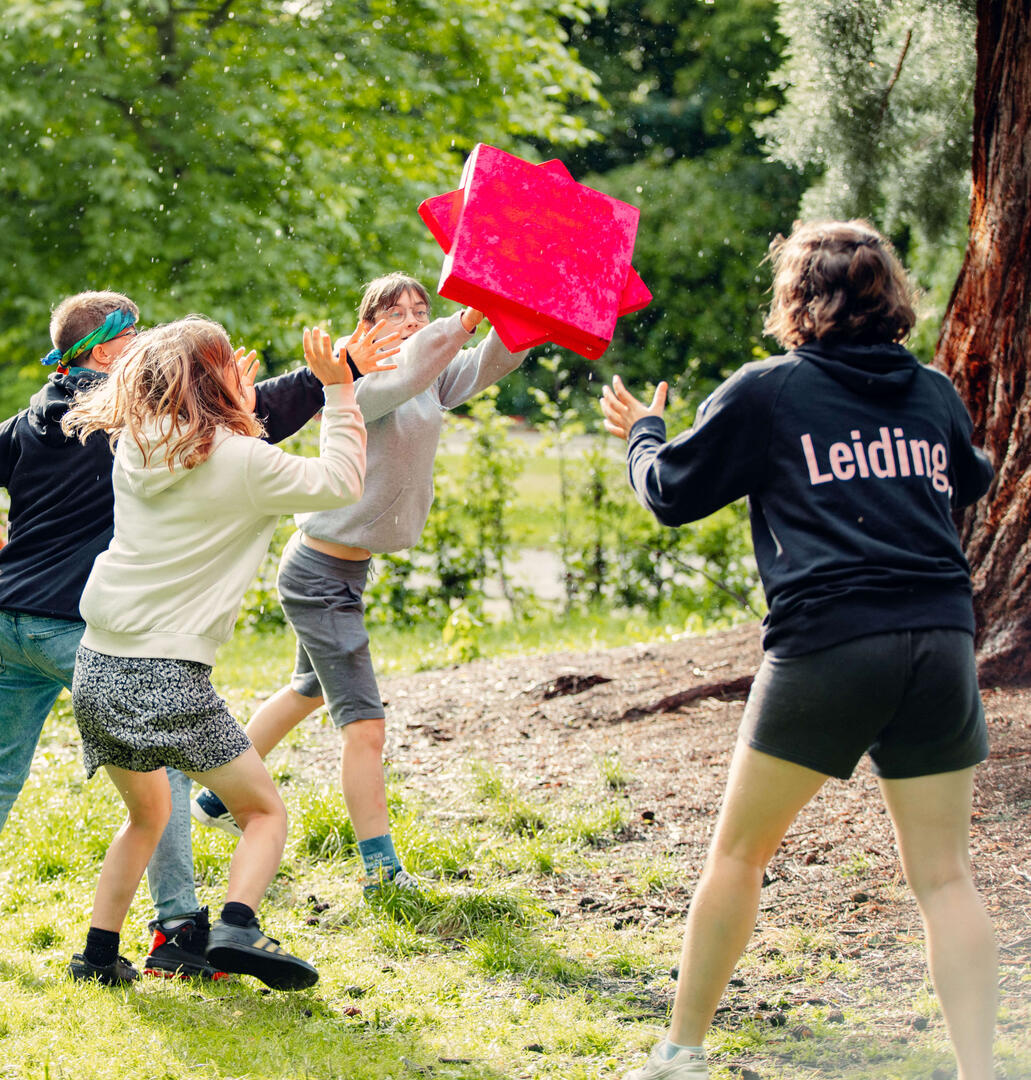
Min19 summer camps, youth leader, queer double standards, traditionalist attitudes, emotional protection, Miss Netherlands
California
Jessica
Bloom Into You, confession, discreet homophobia, Gideon the Ninth, Hong Kong shopping mall murder, JWQS
California
a.z.
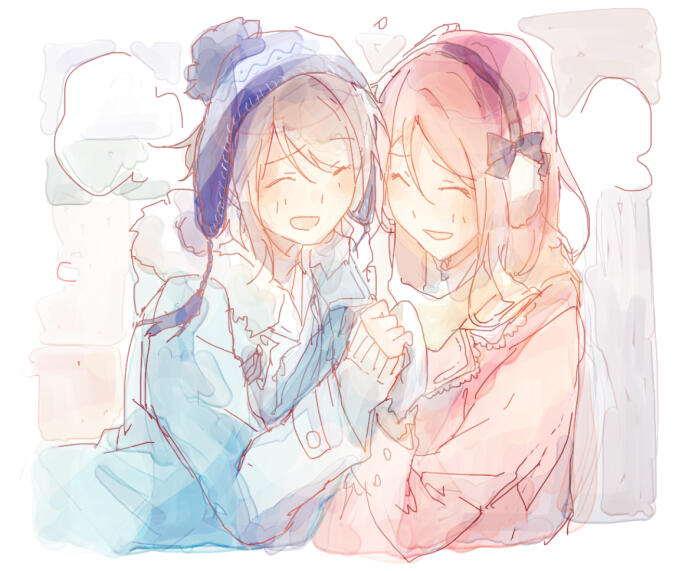
hyperfemininity, Mermaid Melody, queer subtext, magical girl anime, little sister and inclusive media, modern dystopia
Want to be interviewed?
Meet us over Zoom!
Filling out this form indicates your interest in becoming a participant in our project, permitting us to contact you for further discussion. Although this is not a formal research project, we will be adhering to ethical research guidelines and etiquette surrounding personal experiences. This means that:
We require your informed consent through every step of the interview-to-publication process
You are given the option to remain anonymous
You have complete control over the information you want us to keep confidential
You may drop out at any time
Thank you for your participation!
articles
California
Leadership In a Changing World
T.V. spreads the right information as a queer role model to overcome ignorance.
Flanders
To Speak, It is Impossible to Hide
A spokesperson, an artist, and a queer advocate, Michiko works to promote a safe future for queer youth.

California
LGBTQ+ stories and media became Jessica's gateway to self-acceptance.
Flanders
A youth leader at Min19, Janne works with queer adolescents to carve out a safe space for them.

California
Against the argument that people are "turned gay," A.Z. proves that she has always been drawn to hyperfemininity.
Pennsylvania
Growing up in masculine clothes is a struggle for those who only want to feel comfortable.
Oregon
The Triumph of Changing Perspectives
Mell overcomes religious opposition and internalized homophobia to find his own stance.
California
Holding Your Ground as a Queer Gamer
D.P. encounters prejudice as a female bisexual player in unwelcoming internet gaming spaces.
California
Boybands and Girl Shows: an Internet Pipeline to Self-Exploration
Hailing from a conservative Christian family, Christina finds her community elsewhere.
California
After encountering homophobia among those they considered friends, V.H. feels safe in their current friend group.

California
An Undersung Spectrum but No Less Vibrant
Sahasra identifies visibility as an area lacked by members of the asexual community.

California
Grown Up Enough: Coming Out as a Teenager and Lessons in Tenacity
Sierra has spent their adolescence affirming their identity, even when loved ones tell them they're not ready.
California
Harmful Assumptions and Their Solution
Having submerged herself in progressive online spaces through her own initiative, R.S. is ready to see others do the same.
Publications
Here is where we'll post updates regarding editorials that have been published!
Teen Zine Editor's Choice Presents
To Speak it is impossible to hide
“I am nonbinary and how people see me is how they see me, but not who I am.”
Teen Zine Editor's Choice Presents
born this way
“From the start, I never liked men's aesthetic. I like dresses. I liked long hair and feminine things."

Leadership in a Changing World
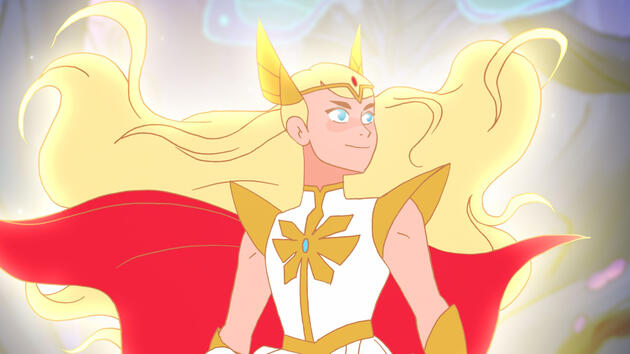
California is one of the most liberal states in the United States, known for being the first to legalize same-sex couples and implement anti-discrimination protection policies. However, the Bay Area contains an increasingly minority-majority population, and accompanying large numbers of moderate or right-leaning immigrant families is an avoidant or contrary sentiment toward the LGBTQ+ community.As a child of immigrant parents and the former president of American High School’s LGBTQ+ Club, T.V. has experienced both ends of the spectrum regarding spaces for queer teens.Describing queer identity as a “very taboo topic for immigrant parents,” T.V. was told by her mother that “everyone goes through this phase.” She realized she was bisexual in “early seventh grade.”“I didn't know it was a thing before that. I just didn't know you could. I realized that I can literally have a crush on a girl.”Their prior exposure to the LGBTQ+ community involved the superhero TV show Supergirl.“In fifth or sixth grade, I watched Supergirl. And in that show, I think Supergirl’s sister is a lesbian. My mom made me stop watching the show after, but then I Googled it. I was like, Oh, this is interesting. I went down an internet spiral,” T.V. recalls.In middle school, T.V. came out on a school group chat of 50 people.“That was not a good idea in hindsight,” they reflect, “because at that age, a lot of people don't know much about [LGBTQ+ identity], especially very sheltered kids. They don't understand it. So they'll use that to alienate you.”
T.V. believed that the treatment she experienced “came from a place of ignorance, not malice.”“You don't really know anything when you’re twelve,” she says.Ostracization was not the only challenge T.V. faced after coming out. She recounts, “People thought I was dating my best friend because I really only hang out with her. And I have to be like, We're just friends.”Similarly, they received uninformed comments about their bisexual identity from peers in high school. “I broke up with my girlfriend at the time and then they were like, Oh, so you're straight. So they still had that misconception that you can either be straight or gay and there's no in-between.”Generally, T.V. finds that students have become more open-minded about nonconformative gender and sexuality in high school and after the pandemic.“People stopped treating it like it was such a big deal. That's one of the good things about it being normalized,” she says.T.V. observed the same change with the teachers at American.“Back in our freshman year, one of my friends was using they/them pronouns and their teacher was refusing to use them. She was like, That's not grammatically correct. I don't know if she still thinks that because I feel like they/them has become a lot more normalized since 2019. Especially because she has a pride flag [now]. Another one of my teachers had multiple kids that used different pronouns than whatever gender that showed up on the roster. He took a while to get used to that—and he's 60, he retired last year—but he's still open-minded. He made mistakes but he apologized and said, You know, I'm doing my best to use them.”“The schools [here] do try their best to be inclusive—like with the pride flags, having Equity as a committee and ASB to spread information,” she comments. As a Class of 2023 graduate, T.V. has researched LGBTQ-friendly colleges in the hopes of spending the next four years of her life in an accepting community.“Mostly college towns everywhere tend to be more liberal and more open-minded. So even if you're in like Texas, or Ohio, or somewhere like Indiana, the area around the college tends to be accepting. And there are a lot of programs. Since I applied mostly to UCs, I did look into the resources for students at the college I'm going to. There's a whole center there [for LGBTQ+ students] and there's queer living spaces, trans-inclusive housing, and all that. So I think that's a good step.”
T.V. claims that the greatest source of difficulties they faced was their parents.“If [my mom] ever comes across a message on my phone on accident, where she where I mentioned being queer, she says some passive-aggressive comment about it and then she just forgets that it happened. And yeah, she's okay with other people being queer—she's not really aggressively homophobic anymore. She tries to be open-minded in terms of other people, but whenever it comes to me, she just pushes it aside and avoids the topic.”Regarding her father, she says, “I don't think he ever found out [about my sexuality] but he's pretty conservative. He's conservative in the Fox News way. I feel like if he found out [about me] he wouldn't care, because he's one of those people who's like, You can be gay. Just don't shove it down other people's throats.”Propelled by the polarizing views of their home and school environments, T.V. has engaged in addressing LGBTQ+ issues by educating herself and others.“I hear about stuff like Ron DeSantis and [the policies] in Florida. They try to ban [discussions] about race and the teaching of kids that being gay is okay. It's not like being queer is inherently sexual. It's a very normal thing to have crushes on other kids if you are a kid. I feel like conservative politicians try to turn being queer into an inherently sexual thing that can't be exposed to kids. [For example,] reading a book that's like, This kid has two mothers or two fathers. What's wrong with that? That's literally cute. It's a family.”T.V. expresses concern over the malicious use of new technology such as improved editing software and AI, and how they may aid in anti-queer propaganda. “I've seen people alter videos of drag performances and add children into the audience. I saw that on Twitter, and then there was that little Information You Might Want to Know tab at the bottom of the photo [that said,] This image has been altered. And that's crazy. People are trying too hard to make stuff up just to cause harm. That's really scary.”Despite the opposition she sees and faces on a daily basis, T.V. takes on the role of an educator and is outspoken about her support of the LGBTQ+ community.
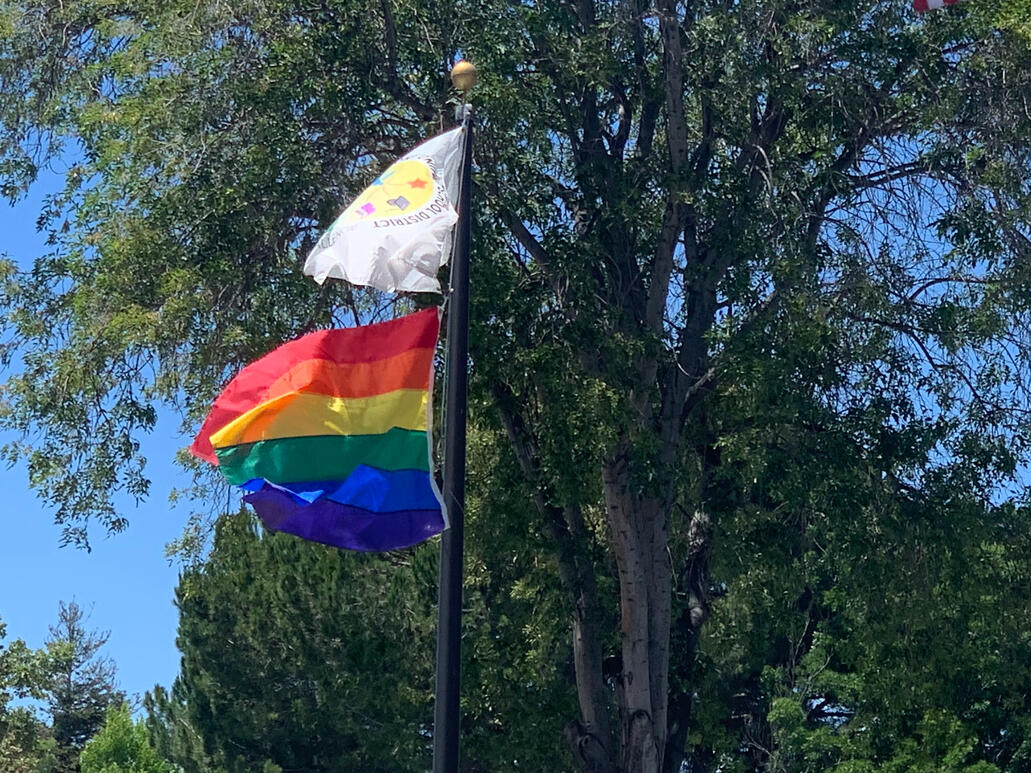
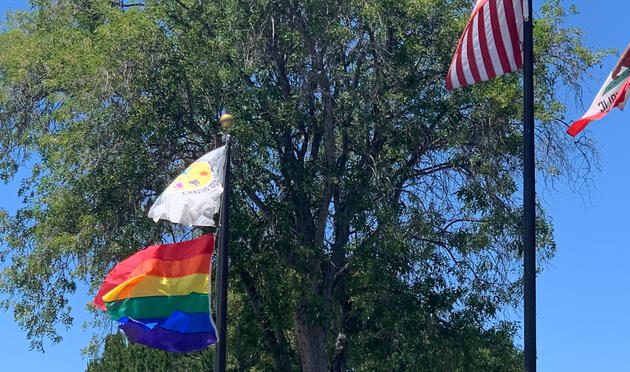
She speaks about the time she and her family “saw a pride flag at an elementary school.”“I don't remember what school, but [my dad] saw it there and he was like, Why does that have to be there, that shouldn't be part of schools. And then I was like, It's just to make queer students feel safe because a lot of the times parents don't give them that support. So the school is trying to step in and do that. And that kind of caused like a bit of an argument.”They also try to be a positive influence on their younger sister who is in middle school. “My mom mentioned [that] one of my sister’s friends came out, and my sister told her about it. And I said, It's not that big of a deal. Don't worry.”Ultimately, T.V. likes the Bay Area and doesn’t see herself leaving anytime soon. “I definitely want to stay in California. I'm just so used to the bubble that we live in. I've never faced any serious racism or homophobia here, and I'm really privileged to be able to live here. So I'm gonna try not to leave.”As a college freshman next fall, T.V. will no doubt continue to contribute to the safe and accepting community for LGBTQ+ people of color the Bay Area needs.
michiko
To Speak, It is Impossible to Hide
Follow Michiko on Instagram @michikolii!
“I am nonbinary and how people see me is how they see me, but not who I am.”A spokesperson, an artist, and a queer advocate ahead of their time, Michiko Limanya is currently a representative of the Belgian youth LGBTQ+ organization Wel Jong and a public influencer on Instagram. They dedicate much of their time to expressing themselves through words and movement, and they encourage others to do the same while providing a safe and instructive space for queer youth.Michiko’s focus on self-acceptance with their “first queer realization at the age of 10.”“I had a crush on one of my friends and I never thought that I shouldn't have this feeling. It never felt wrong,” Michiko says. “Because if kids that are 10 can see a couple with a boy and a girl, why can I not like a girl?”Their realization occurred in 2011, which saw Belgium in a less progressive state than it is now. With an eye for safety, Michiko decided not to share that piece of their identity with their surroundings.“I saw how people were treating other queer people.” They remember thinking, “Let me just keep that for myself for the moment.”This was possible through the internet, and Michiko claims that “Instagram and Tumblr really helped [them] through.” A decade ago, few words in the Flemish language that could accurately describe their identity that encompasses panromanticism and asexuality. Thus, Michiko joined online English-speaking communities as they “waited for the Flemish words.”“Thanks to Instagram, and Tumblr, and just me being online, me being open to talk English, I learned a lot of things.”As a child transitioning into teenhood, Michiko was also “very aware of [their] gender” and the “gender stereotypes that were heavily pushed on [them].” They showed telltale signs of preferring to identify outside the gender binary even through the games they played with other kids.“When playing a game like Family, I always liked to play other roles. I often was the father, or if there was an option not to be one of the binary genders, I always tried to be the other one,” they say. “We had a story that we had to reenact and it was about princess and prince, and I was the dragon, which was very nonbinary of me.”A difficult time for Michiko was puberty, commonly known as a period of heightened gender dysphoria for adolescents under the transgender umbrella.“I had my first period in secondary school. I remember I was hiding it from my parents. I told my sisters but I did not tell my parents because I knew they would tell me, You’re finally a woman, and I'd say I'm not.”Michiko disliked losing control over the way they looked, especially in terms of how others would label them.“I was very comfortable before my body was growing because people couldn't know if I was a guy or girl. It was just like me.”This led to a long journey of finding themselves through clothing choices. At 18, Michiko was “following very manly trends,” such as wearing cargo pants. However, they reflect that they only leaned toward masculine styles “so that people would look differently at [them].” It was only later that this began to change.“I have different clothing styles. I'm also an artist, so I just experiment with lolita clothes, Japanese-style clothing. And it took me a long time before I started wearing [them] because I was scared that people would see me as a woman.”“But the moment that I shared my nonbinary identity and I accepted that part of myself, I was very comfortable,” Michiko says. “That's when I suddenly started to wear more ‘feminine’ clothes, people would say. But for me, it’s just clothes that I feel comfortable in and where I think my body comes out to be most beautiful.”Now identifying as agender while also using the terms transgender and nonbinary, Michiko feels confident in their choice to wait before coming out.“I always thought that safety was so important,” Michiko says. “If I know that I will not be happy telling that to a certain person, then I don't see the use of telling that person. I always try to create an environment that's very protective. So I live kind of in a bubble, but I would rather have that.”Michiko advises young queer people to think carefully before choosing who they confide in and when. “Are you sure? Are you sure you want to share that part of yourself?”“I tell people to be sure of how you're gonna explain it because people are going to going to ask questions. Maybe it's not even bad questions, but they're curious. I had to explain to people why I'm trans because a lot of people know binary trans where you go from another gender to another one. And then you got me who didn't do any medical transitions, for example, but I did have my social transition. So I had to explain that. Imagine if I wasn't sure about myself. How are you going to convince someone else that you are that identity? So I really told myself, I have to be safe and I also have to be convinced that I really am nonbinary, that I know how to explain that for myself.”
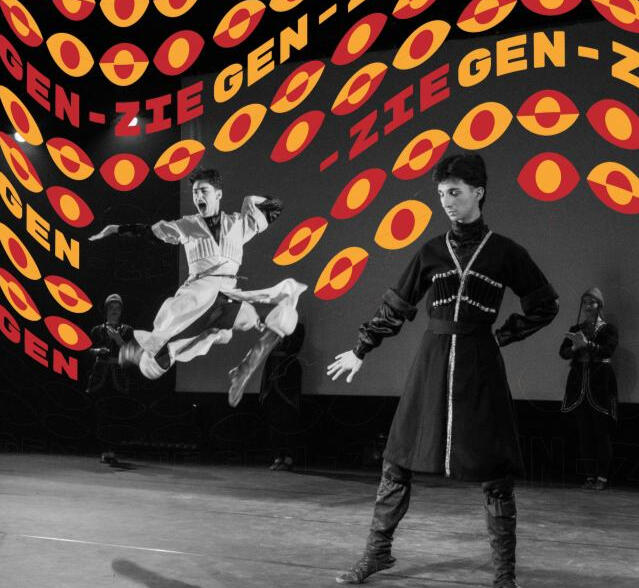
Michiko shares that they “became more open about [their] queerness” when they “started college.”“In college, there's so many people, and we're all discovering ourselves, and it doesn't really matter anymore if my classmates don’t like me, because I can skip school. In high school, you have to see those people every day,” they say. “So that switch in social interaction gave me the ability to be more open and more free.”Avoiding classes became a habit for Michiko, especially after the asynchronous education experience that came with the COVID-19 pandemic. The college that they go to, Karel de Grote Hogeschool of Antwerp, has religious affiliations with Roman Catholicism. Though the administrators have shown progressive attitudes, the same is not always translated to the student body.Michiko states, “I don't really like the environment of the students at my school. Why? Because there's a lack of diversity. A lot of them come from other cities that are less diverse, so there's an ignorance very present over there. And maybe it's ignorance that they don't even realize until they start meeting diversity, but I don't want to be that first person. I don't want to be that person to tell them the whole time: No, that was ignorant. I have my own life. I go to school to learn and not to teach.”At times, the problem extends to Michiko’s professors, an alarming occurence in their program of art and culture.“In my first year, we had one teacher of sociology, and he was openly homophobic. And I was so surprised,” they recall. “I just stood up and left this class and I never came back. So I did all those classes at home because I would not be in an environment where someone is literally against me being alive.”Michiko underscores the importance of keeping bigoted and discriminatory views out of classrooms and higher education lecture halls: “I'm open about my identity, but maybe there are so many other people who are not open yet. Maybe there are other people that don't even know yet. And to see that negativity in school, it can cause a lot of distress for people.Even from more accepting peers, Michiko sometimes sees “a difference between them when it comes to judgment.” A common phrase they hear from people confronted by an unfamiliar queer concept is “I didn't know it was possible.”“Meanwhile, from the internet, I just saw how people always are saying that you're free to discover. If you say that you’re nonbinary and if you decide to wear dresses, then you’re still nonbinary. A community can have that social pressure of saying this is right or wrong. But what's right and wrong in queerness?”Outside of class, Michiko is known for their work as an influencer and queer representative, so much so that Karel de Grote admin has asked them to “be open about [their] queerness.”“I am the diversity, so you cannot even skip me because I am here. I'm not just a theory from your book, I am present.”Their study of art and culture overlaps with their queer identity through performances, lectures, and their own youth art festival. The GEN-ZIE festival is held in Antwerp during November for youth from 14 to 24 years of age. This upcoming fall will see its third edition.Michiko explains, “The moment that I started college, I created that festival, and the whole concept is to just recruit young people and let them do art. It's three free days and then we have one showcase. There's no competition. You don't have to pay anything. It's all networking and socializing.”One of GEN-ZIE’s goals is to foster “inclusive communication.” Michiko used the festival as an opportunity to “ask people their pronouns” when “giving out name tags.” When people were curious and began to “ask questions,” Michiko knew that they had achieved their purpose.“This is my moment to explain it to them. So that's why I always apply my queerness in almost everything, because it's always a moment to start the conversation and make people aware that I am here, I am present, and a lot more people are present.”Michiko’s own art expression includes poetry, spoken word, and movement, which they note is “not dancing, it’s more moving.” They write about “the search of all feelings and desires” and their own asexual experience of “not always understanding sexual desires.” Yet the majority of their art is not completely centered around queerness.“I’m a spokesperson, so I don't have the need to put it in my art again. Because besides being queer, I'm still a human.”In the instances where Michiko’s identity is at the forefront, they are used to being the face, such as in the LGBTQ+ organization Wel Jong. Their work includes pride events, panel talks, campaigns, and collaboration with “almost every queer organization in Flanders.”A recent activity this summer was conducted with Min19, a group supporting queer kids younger than 19. Aside from camps and movie nights, Min19 also takes participants to Pride as a group “for safety.”“It's just to bring queer people together to talk and explore,” Michiko says.On the political side of Wel Jong is the relentless effort to secure LGBTQ+ rights and to raise awareness of anti-progressive actions.
“My colleagues are present when there's things going on with the law. At conferences and decisions about lawmaking, they're present there. For example, when there's a hate crime going on, we also answer that. We are like the youth queer organization for all of Flanders.”This is why, in terms of current events, Michiko is “always very much up to date on what's happening in America.”“Everything that happens in America eventually goes here, Belgium,” they say. “Two weeks after they were happening in America, there were already protests from hate groups saying that being trans is just like pedophilia.”Michiko’s close following of American and global LGBTQ+ news allows them to know in advance what information they must share. Their current focus is the ruling of Supreme Court case 303 Creative LLC v. Elenis which now suggests that businesses may refuse service to queer clients and customers on religious grounds.“They didn't talk about that yet here. But I was looking at that, and I know we're protected in Europe because when you’re from the EU Parliament, you cannot just decide on certain laws. And because queer rights are human rights here in Europe, you cannot just decide to remove that law. We're kind of safe, but this can spark conversations and discussions.”When confronted with anti-LGBTQ+ sentiment, Michiko spends most of their time “sharing the right education” instead of directly engaging hate groups.“I'm someone that doesn't go into discussion. I'm always open to talk, but not a discussion if you’re so passionate about your hate.”To young and aspiring queer rights advocates, Michiko says: “When you educate people, you're a part of activism. It's kind of the same as the labels that we use; it's a tool to explain yourself. I can be nonbinary without saying that I'm nonbinary. Me choosing to use the label nonbinary is a tool for other people to understand me better. So I don't actually have to say that I'm an activist, but I do just as a tool so people like journalists know they have to contact me. But you will not see it on my Instagram. Why? Because I'm fighting for my rights. I'm literally fighting to be present. So is that activism if I'm fighting for my own life?”“It's something that you choose. But if you already are actively sharing the right education, and you are aware of what's going on in the world, that's also activism.”
janne
Under 19 and Beyond